Jack Burton Jack Burton
Freelance PPC consultant, Leeds

Healthcare & life sciences PPCwith every ad under control.

I've spent three years running healthcare ads, including accounts for some large pharmaceutical brands. I treat compliance with the utmost importance and diligence: every ad that goes live is exactly what your reviewers signed off, and the campaigns still reach the right patients and professionals and deliver results.

  • 11 years and £20M+ in managed ad spend
  • 3 years running healthcare campaigns
  • Airtight compliance on every ad
  • Direct access, no long-term contracts

Healthcare brands I've worked on

Pharmaceuticals and medical technology, worked on agency side at IPG.

Healthcare PPC plays by different rules.

The ad platforms are built to test, rewrite and expand. In a regulated sector, each of those defaults is a risk.

Every line needs sign-off

Ad copy goes through medical, legal and regulatory review, and the ABPI Code, PAGB codes and CAP Code can all apply. Approval takes time, so the account has to be planned around it.

Google rewrites ads by default

Text customisation, automatically created assets, final URL expansion and account-level assets can all put unapproved words or pages in front of people.

Strict platform policies

Prescription medicines can't be advertised to the UK public, Google restricts drug terms, and many healthcare advertisers need certification. One wrong keyword can stop a campaign.

Two audiences, two rulebooks

What you can say to a healthcare professional often can't be said to a patient. Campaigns, audiences and copy have to be kept apart.

People searching at a hard moment

Someone looking up a symptom or a diagnosis needs calm, careful copy. Clickbait headlines and urgency tactics have no place here.

Targeting and tracking are limited

Google restricts health-based targeting, and Meta blocks many health advertisers from optimising to leads or sales. Channel choice matters more than usual.

Every ad shows exactly as approved.

Responsive search ads mix headlines and descriptions into thousands of combinations, and Google's automation adds its own on top. That flexibility helps in most sectors. In healthcare, every combination a person could see has to be one your reviewers have approved.

I take real time and care over this. Google is always looking for ways to amend your ads, and I take every precaution needed to make sure none of those changes reach a live ad. Accounts are locked down so what's live always matches what was signed off, with a record that shows it, and the settings are checked again whenever Google adds a new automated feature.

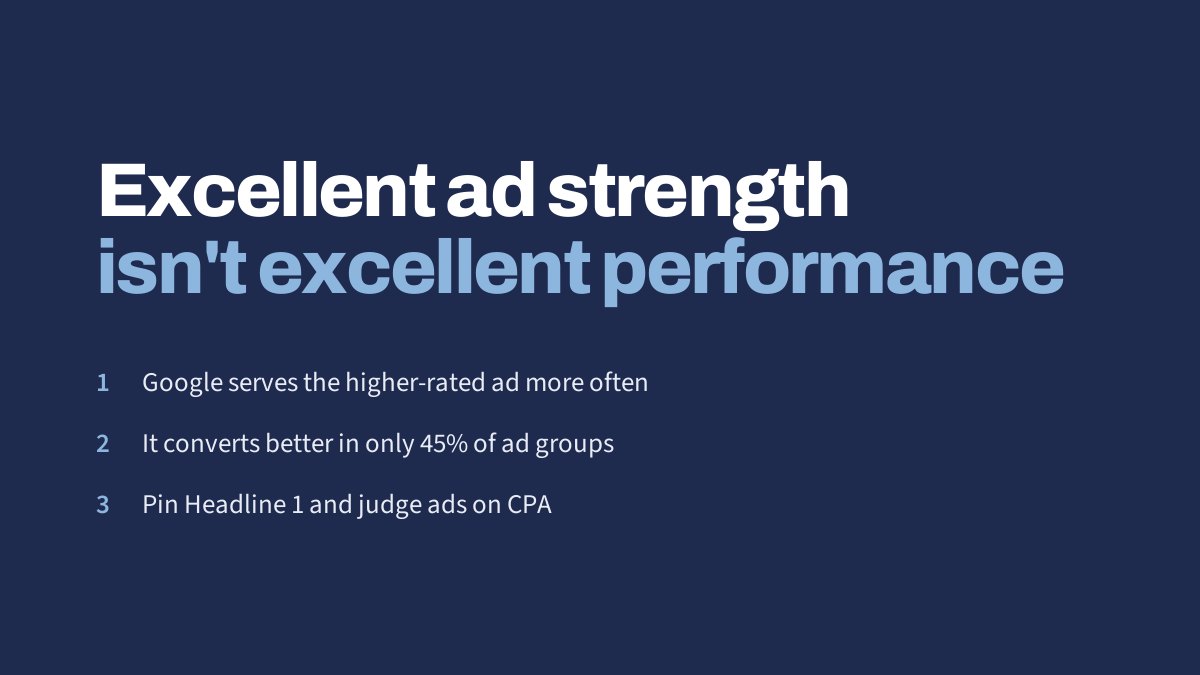
Read: excellent ad strength isn't excellent performance →

Locked down before launch

  • Text customisation and auto-created assets off, so Google can't write its own copy.
  • Final URL expansion off, so traffic only lands on approved pages.
  • Account-level automated assets reviewed and switched off where they aren't approved.
  • Headlines and descriptions pinned so every combination stays within approved copy.
  • Live assets checked against the approved version, with a change log to show it.

Careful copy, built around your approval process.

Health is personal. Ads about a condition reach people who are worried, unwell or caring for someone who is. The copy has to be accurate, calm and human, and it has to clear review.

  • Written for review. Copy submitted as the combinations people will see, with every claim referenced so reviewers aren't left guessing.
  • Planned around sign-off. Review time built into launch plans, so campaigns go live on schedule with approved copy.
  • The right voice for each audience. Plain, reassuring language for patients and carers. Precise, clinical language for professionals.
  • Within the codes. Copy and campaigns set up with the ABPI Code, PAGB codes, the MHRA Blue Guide, the CAP Code and Google's healthcare policies in mind.

The right people, on the right channel.

Reaching people with a specific condition, or the clinicians who treat it, is a targeting problem first. Picking the right channel does most of the work.

I'll advise on channel mix and budget split from your objectives, whether that's awareness, patient enquiries or reaching healthcare professionals, and tell you where a channel won't earn its place.

Patients

Search reaches people looking for a condition or treatment at the moment they need it.

Carers & families

Often the ones doing the research. Copy and landing pages that speak to them too.

Healthcare professionals

LinkedIn and Microsoft Ads reach people by job title, specialty and employer. Search covers clinical queries.

Awareness

YouTube and display build recognition where direct-response targeting is restricted.

What's included

Ongoing management, a one-off audit of an existing account, or support getting copy through approval.

Controlled account setup

Automation settings locked down, pinning in place, and policy and certification checked before launch.

Search on Google & Microsoft

Condition, treatment and brand searches covered, with careful negative keyword lists.

Healthcare professional targeting

LinkedIn and Microsoft Ads audiences built by role, specialty and organisation.

Awareness campaigns

YouTube, display and paid social where the platform rules allow.

Copy & approval support

Ad copy written for review, approval packs prepared, and live ads checked against them.

Landing pages & tracking

Consent-aware tracking that respects platform health data rules, plus page recommendations.
Is this a good fit?

A good fit if

  • You're a pharma, medtech, clinic or healthcare brand, or an agency working for one
  • Your ad copy goes through medical, legal or regulatory review
  • You need to reach patients, carers or healthcare professionals
  • You want full control over what Google shows

Probably not a fit if

  • You want Google's automation switched on and left alone
  • Copy can't be shared with the people who approve it
  • You want to advertise prescription medicines to the UK public

Questions from healthcare brands

Not to the public. UK law doesn't allow prescription-only medicines to be advertised to the general public, and Google only lets pharmaceutical manufacturers promote prescription drugs in a few countries, such as the US, Canada and New Zealand. Disease awareness campaigns and activity aimed at healthcare professionals are still possible, within the ABPI Code.
I switch off text customisation, automatically created assets, final URL expansion and any account-level automated assets that haven't been approved, and pin headlines and descriptions so every combination stays within approved copy. Live ads are checked against the approved versions, and settings are reviewed whenever Google adds a new automated feature.
Yes. I prepare copy in the form reviewers need, build review time into launch plans and work through their feedback. I'm not a replacement for your regulatory team. My job is to make their review simpler and make sure what goes live is what they approved.
Yes. LinkedIn and Microsoft Ads can target by job title, specialty and employer, and Search can cover the clinical queries professionals use. Campaigns aimed at professionals are kept separate from anything the public could see.
It's rarely the right choice where every ad needs approval, because it generates and mixes assets and can send traffic to pages you didn't choose. I use Search and channel-specific campaigns where control matters, and only test Performance Max where it can be locked down to approved assets and pages.
Meta stops many health advertisers from sharing or optimising to lower-funnel events such as leads and purchases. Campaigns there lean on upper-funnel goals, and other channels usually carry more of the conversion work.
Yes. Some brands need patient enquiries, some need professionals to engage, and some need awareness of a condition or treatment. Objectives set the channel mix, and I'll be clear about which channels suit which goal.
There's no minimum. Some healthcare professional audiences are small, so spend is rarely about volume. What matters more is how you reach people and in what format, and I'll suggest a budget that fits your audience and objectives.
An audit of your account settings and live ads against your approved copy, switching off anything that puts unapproved content at risk. Then a plan for channels, audiences and copy that fits your objectives and your review process.

Related reading

Jack Burton

Talk me through your campaigns.

Tell me what you're promoting, who you need to reach and how your approval process works. You'll hear back from me directly, usually within one working day.